


Marijuana DUI charges in Birmingham, Alabama, do not depend on a blood alcohol concentration or a fixed THC limit. Prosecutors may try to prove that a driver was under the influence of a controlled substance to the point that they could not safely operate a vehicle.
If you were arrested after police suspected marijuana impairment, Jaffe, Hanle, Whisonant & Knight, P.C. can review the traffic stop, testing, and other evidence involved. Call us today at (205) 930-9800 to schedule a free consultation with a Birmingham marijuana DUI attorney.
How Can Jaffe, Hanle, Whisonant & Knight, P.C. Help After a Marijuana DUI Arrest in Birmingham, AL?
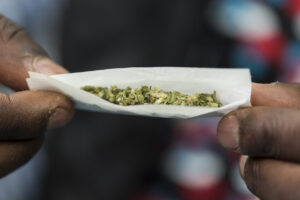
A marijuana DUI case can turn on details that are easy to overlook, including why the officer stopped the vehicle, what the officer observed, how field sobriety testing was conducted, and what chemical testing actually showed.
When you hire our firm, our Birmingham drug crimes attorneys can:
- Review the reason for the traffic stop and arrest
- Examine body camera footage and police reports
- Evaluate field sobriety test results
- Review blood, urine, or other chemical testing
- Challenge evidence that was improperly obtained
- Identify weaknesses in the prosecution’s claim of impairment
- Represent you in negotiations and court proceedings
At Jaffe, Hanle, Whisonant & Knight, P.C., our attorneys bring 100 years of combined experience to serious criminal matters in Alabama. Our Birmingham criminal defense attorneys can look closely at the circumstances surrounding the arrest and determine which issues deserve the most attention.
Give us a call today to arrange a free consultation.
Can You Get a DUI for Marijuana Use in Alabama?
Yes. Alabama’s DUI statute makes it illegal to drive or be in actual physical control of a vehicle while under the influence of a controlled substance to a degree that makes the person incapable of safely driving.
That means a marijuana DUI charge is not limited to situations where police claim someone was driving erratically. A person may also be charged while in “actual physical control” of a vehicle, a concept Alabama courts evaluate based on the totality of the circumstances.
The state still has the burden of proving the elements of the charge beyond a reasonable doubt.
Can I Be Charged if I Used Marijuana Hours Before Driving?
Potentially. The key issue is not simply whether marijuana was used at some earlier point. For a charge under the controlled-substance provision of Alabama’s DUI law, the prosecution must prove impairment to the degree required by the statute.
THC or its metabolites may remain detectable after the effects have diminished, so a positive chemical test does not necessarily answer every question about a person’s ability to drive at the time of the stop.
The timing of use, type of test, reported driving behavior, physical observations, and other evidence may all become important in determining whether the state can prove impairment.
Can I Get a Marijuana DUI if I Have Legal Medical Cannabis?
Yes. Alabama law states that being legally entitled to use a controlled substance is not, by itself, a defense to a DUI charge.
Alabama’s medical cannabis materials also warn patients not to drive while under the influence because cannabis can affect coordination, cognition, judgment, and motor skills.
A medical authorization may explain why cannabis was present, but it does not permit someone to operate a vehicle while impaired.
What Are the Penalties for a Marijuana DUI in Birmingham, Alabama?
The penalties under Alabama’s DUI statute generally depend on the number of prior qualifying DUI convictions and other circumstances.
For a first conviction, Ala. Code § 32-5A-191 provides for:
- Up to one year in county or municipal jail
- A fine of $600 to $2,100
- A 90-day driver’s license suspension, subject to certain ignition interlock provisions
- Completion of a DUI or substance abuse court referral program
A second conviction can bring higher fines, mandatory jail time or community service, a longer license revocation, and an ignition interlock requirement. Third and subsequent convictions carry increasingly severe consequences, and a fourth or subsequent DUI can be prosecuted as a Class C felony.
Certain circumstances can also affect sentencing. For example, Alabama law provides enhanced punishment when a person over 21 is convicted of DUI while a child under 14 was a passenger in the vehicle.
What Defenses May Be Available to Marijuana DUI Charges?
A defense will depend on how the arrest occurred and what evidence the prosecution intends to use.
Common issues include:
- Lack of impairment: The defense may argue that the evidence does not show the accused was incapable of safely driving.
- Unlawful traffic stop: Evidence may be challenged if officers lacked a lawful basis to stop the vehicle.
- Problems with chemical testing: Collection, storage, handling, or testing procedures may affect the reliability or admissibility of results.
- Alternative explanations for physical signs: Fatigue, anxiety, medical conditions, or other factors may explain observations officers attributed to marijuana.
- Weak field sobriety evidence: Roadside exercises may be affected by the location, weather, footwear, injuries, or the way instructions were given.
- Insufficient evidence of actual physical control: In some cases, the defense may dispute whether the accused was driving or had the present ability to operate the vehicle.
No single defense applies to every marijuana DUI case. The strongest arguments depend on the evidence the state actually has.
Schedule a Free Case Evaluation With Our Birmingham Marijuana DUI Attorneys
A marijuana DUI case is not simply a matter of whether a test detected cannabis. The prosecution must prove the specific DUI charge under Alabama law, and the evidence surrounding the stop, arrest, and testing can matter just as much as the test result itself.
Jaffe, Hanle, Whisonant & Knight, P.C. represents people facing DUI and other criminal charges in Birmingham, Alabama. Contact our firm to schedule a free case evaluation with a Birmingham marijuana DUI lawyer and discuss the facts behind your arrest.