

I Want to See the Evidence, Not Just the Police Report
When I receive discovery in a criminal case, the police report is important, but I don’t treat it as the final word on what happened. A police report is written from the perspective of the investigation. In my experience, information that supports the government’s theory tends to make its way into that report. Information that doesn’t fit that theory—or that may actually help my client—may not receive the same attention. That becomes particularly important because the police report may be one of the first things a prosecutor reads when evaluating a case. If there are inconsistencies, missing context or information that is simply incorrect, part of my job is making sure the prosecutor sees those things too.
Statements are one of the best examples. If a report says my client made an incriminating statement, I want the actual interview. If there’s body-camera footage, I want the body-camera footage. If there’s audio, I want the audio. I generally don’t make up my mind about a client’s statement based on the police report because I’ve seen too many situations where the actual recording gives me a very different picture. When a client tells me, “I didn’t say that,” and the report says he did, my answer is usually pretty simple: let’s see the recording.
I have a case right now that illustrates exactly why. If I relied only on the police report, I would come away believing my client voluntarily gave an incriminating statement. When I watch the actual interview, I see something very different. In my view, the interview was coercive, the statements attributed to my client don’t accurately reflect what he actually said, and even the quotes included in the report are either inaccurate or presented without important context. Based on what I see in the interview, I believe there are substantial grounds to ask the court to suppress the statement. The court will ultimately decide that legal issue, but I wouldn’t even have the full picture if I simply accepted the written description of the interview.
Context is one of the biggest reasons the recording matters. You can take a few words from a long conversation and make them sound much more definitive than they were. The question immediately before an answer matters. What was said five minutes earlier may matter. The way the interview was conducted may matter. Sometimes the exact words attributed to somebody aren’t even what the recording shows he said. None of that means the video is automatically going to help my client. Sometimes I watch the video and it hurts us. That’s fine too. I need to know what the evidence actually shows, good or bad, because that’s the case I have to defend.
Video also cuts both ways when I’m dealing with my own client. People are generally not great narrators, particularly when they’re trying to remember a stressful event. Eyewitnesses aren’t always great narrators either. A client may remember something differently than what the video shows, and if the footage contradicts him, I’m going to tell him. I’ve also had people insist that footage must have been altered because they don’t like what it shows. I’m going to confront that too. If fifteen minutes of a recording are missing, that’s something I want to understand. But claiming that a continuous, timestamped video was somehow secretly edited simply because it doesn’t match someone’s memory is a very different thing. My job isn’t to blindly accept my client’s version any more than it is to blindly accept the police report.
That’s why I want my clients to tell me the truth about what happened. Sometimes people seem to think they need to convince their lawyer of their innocence before the lawyer can defend them. That’s not how I look at it. I’m fine with my client telling me what happened and what didn’t happen. The overwhelming majority of criminal cases don’t end in a jury trial, and even among the cases that do, defendants don’t always testify. Building a defense around the idea that my client will eventually take the stand and tell everybody his side usually isn’t where I want to start. I want to know what the government can actually prove.
That changes the way I look at the entire case. What does the video show? What did the witnesses actually say? Are their accounts consistent? What physical evidence exists? What did my client actually say rather than what the report says he said? What is missing? If the government’s case has problems, I want to find those problems in its own evidence. I can do that much more effectively when my client is honest with me about what happened because I’m not wasting time preparing for surprises that he already knew were coming.
I also think people sometimes misunderstand the role a police investigation plays in the criminal process. Most people understandably assume the purpose of an investigation is simply to find the truth. In my experience as a defense lawyer, once investigators develop a theory about what happened and who they believe committed an offense, the investigation can become focused on building that case. The report that ultimately reaches the prosecutor may reflect that theory. That doesn’t mean every officer is dishonest or that every report is inaccurate. It does mean I don’t believe my job is finished when I’ve read it.
A prosecutor may initially be evaluating the case based largely on the material law enforcement put in the file. If something important is missing, the prosecutor may have no reason to know it’s missing until somebody points it out. That’s part of our job. We have to find the inconsistency, locate the video, identify the witness who wasn’t interviewed, put a statement back into context or show why the actual evidence doesn’t support the characterization in the report. Sometimes that changes the way a prosecutor looks at a case. Sometimes it doesn’t. Either way, the prosecutor should be evaluating the actual evidence rather than an incomplete version of it.
There are cases where the evidence is bad for my client. There are cases where my client made a mistake and the evidence proves it. Being a defense lawyer doesn’t require me to pretend otherwise. It requires me to understand exactly what the government has, understand my client and the circumstances that brought him into my office, know the law, and figure out the best way to help him.
The police report helps me understand the government’s version of the case. But the government’s version of the evidence and the evidence itself aren’t always the same thing. I want to see the evidence.
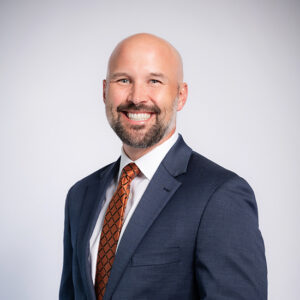
Brett H. Knight is a partner at Jaffe, Hanle, Whisonant & Knight, P.C. His practice includes criminal defense in Alabama state and federal courts.
This article is provided for general informational purposes only and is not legal advice. Every criminal case is different, and past results do not guarantee a particular outcome.
For more information, contact an experienced Birmingham criminal defense attorney at Jaffe, Hanle, Whisonant & Knight, P.C. for a free consultation.
We proudly serve clients in Birmingham and all throughout Alabama.
Jaffe, Hanle, Whisonant & Knight, P.C.
2320 Arlington Ave S, Suite 100, Birmingham, AL 35205
(205) 930-9800